Apple Podcasts Is Getting Video - Here's What It Means for Podcasters

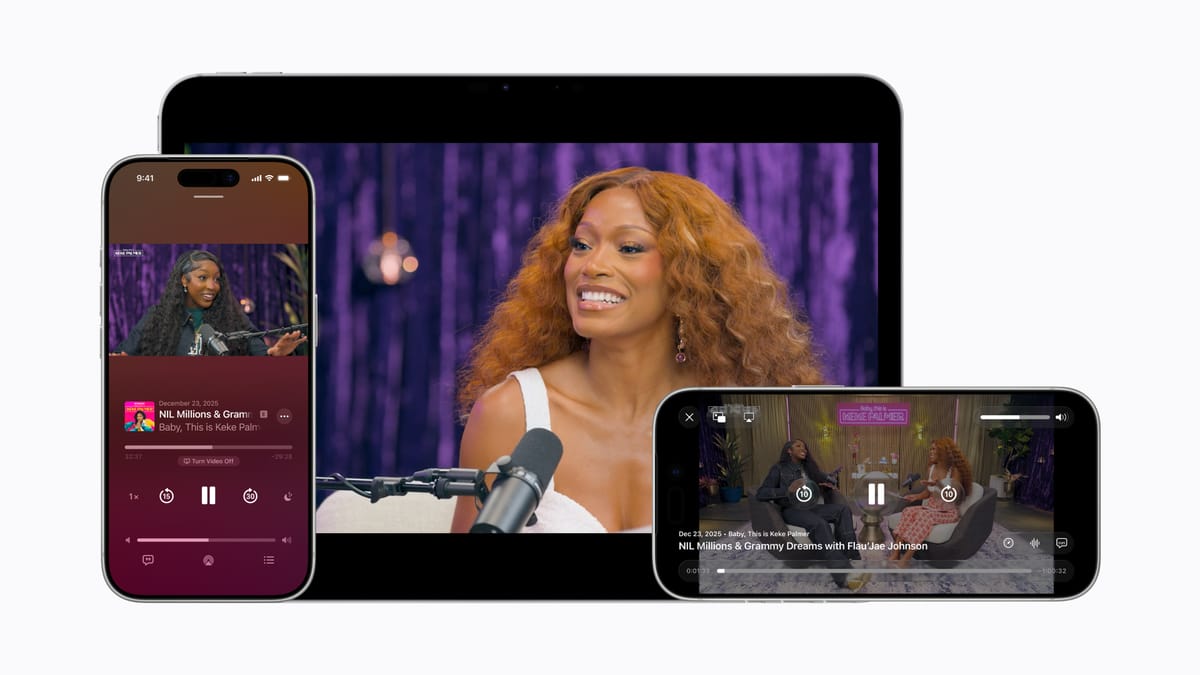
Apple just announced that video is coming to Apple Podcasts this spring. For the first time, podcasters will be able to deliver full video episodes directly inside Apple Podcasts — and listeners can seamlessly switch between audio and video without losing their place.
This is a big deal for video podcasters. It means video is no longer optional, more and more platforms are embracing it.
Here's what we know, what it means for your workflow, and where tools like Riverside fit in.
What Apple Announced
- Seamless audio/video switching — Listeners can move between audio and video without interruption. Start watching at home, switch to audio in the car, pick up video again later — all from where you left off.
- HLS delivery — Video is delivered via HLS (HTTP Live Streaming), Apple's standard for adaptive streaming. This matches how video works across Apple's ecosystem.
- Dynamic video ads — You can dynamically insert video ads, including host-read ads, through your hosting partner. This opens up new monetization that wasn't possible with audio-only RSS.
- Creator control preserved — You choose your hosting provider, ad partners, and business model. Existing features like followers and downloads stay the same.
Which Hosting Providers Are Supported?
At launch, video delivery via HLS is available through these hosting providers:
- Acast
- Art19
- Omny Studio
- Simplecast
Standard RSS feeds can also support video through many additional providers. Apple says broader HLS availability is coming over time.
Notably absent from the initial list: Transistor, Buzzsprout, Podbean, Captivate, Spotify for Podcasters (Anchor), and Riverside's own podcast hosting. If your show is hosted on one of these, you'll need to wait for them to add HLS support.
What This Means for Riverside Users
If you record your podcast with Riverside, you're already producing video content. Riverside records in up to 4K resolution with separate audio and video tracks per participant — which means you already have broadcast-quality video ready to go.
The question is: will Riverside's podcast hosting support Apple's HLS video delivery?
Riverside launched its own podcast hosting service, and it already supports video podcast distribution to some platforms. Adding Apple Podcasts HLS support would be the natural next step — and a huge competitive advantage. Record, edit, and distribute video podcasts all from one platform.
I'm hoping Riverside will be among the next wave of hosting providers to add HLS support.
Why This Matters for Podcasters
Video podcasting has been growing for years, but distribution has been fragmented. YouTube is the dominant video podcast platform, Spotify added video support a while back, and now Apple is joining.
What makes Apple's approach interesting:
- It's podcast-native — Video lives inside Apple Podcasts alongside your audio episodes. No separate channel to manage.
- Seamless switching is a killer feature
- Monetization is built in — Dynamic video ad insertion through your existing hosting partner means you can monetize video without a separate ad stack.
- HLS is a proven standard — Unlike bolting video onto RSS (which has always been clunky), HLS is purpose-built for streaming. This should actually work well.
The Bottom Line
Apple entering the video podcast space validates what many of us have been saying: video is no longer optional for serious podcasters. Between YouTube, Spotify, and now Apple Podcasts, every major platform supports video.
If you're recording with Riverside, you're already producing the content — it's just a matter of distribution catching up. And with Apple's announcement, it just did.
Read the full announcement: Video on Apple Podcasts
Image source: Apple
Need help setting up a video podcast workflow? I coach podcasters and video creators — from recording setup to editing to distribution.